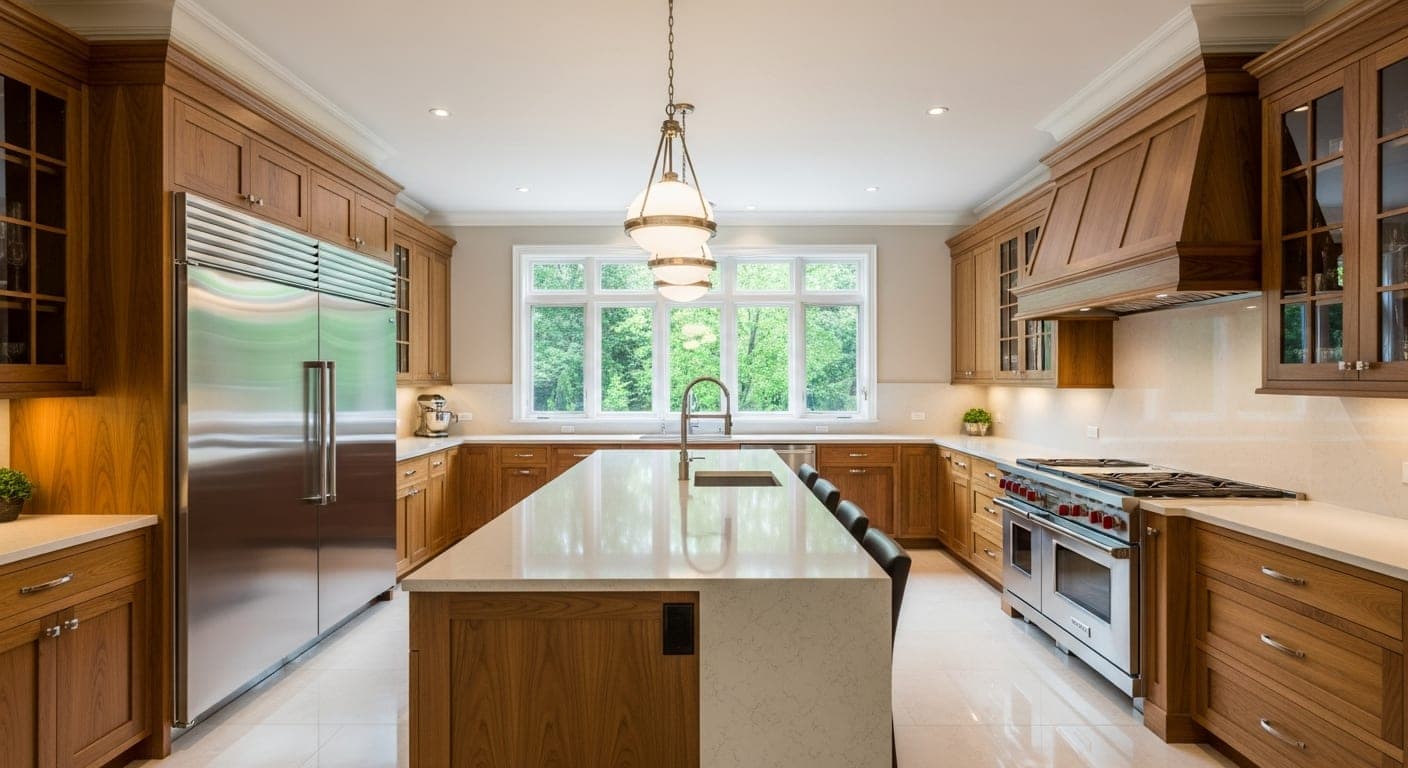
Kitchen cabinets get touched, splashed, steamed, and wiped thousands of times a year. The paint on a kitchen cabinet door works harder than almost any other painted surface in a home. Most cabinet finishes are not built for that level of abuse, which is why they yellow, chip, and peel within a few years.
Why standard cabinet paint fails
Most stock and semi-custom cabinet manufacturers use alkyd or acrylic latex paints applied in high-volume production lines. These finishes are adequate when new, but they degrade quickly under kitchen conditions. Cooking oil vapour settles on surfaces and bonds with the paint. Steam from boiling water opens the pores. UV exposure from kitchen windows causes yellowing, especially on white and off-white finishes.
Within three to five years, the doors around the stove and the sink show it first: yellowed patches, micro-cracks in the finish, edges where the paint has chipped from daily contact. At that point, the homeowner faces a choice between living with degraded cabinets or paying for a full refinish.
What we use instead
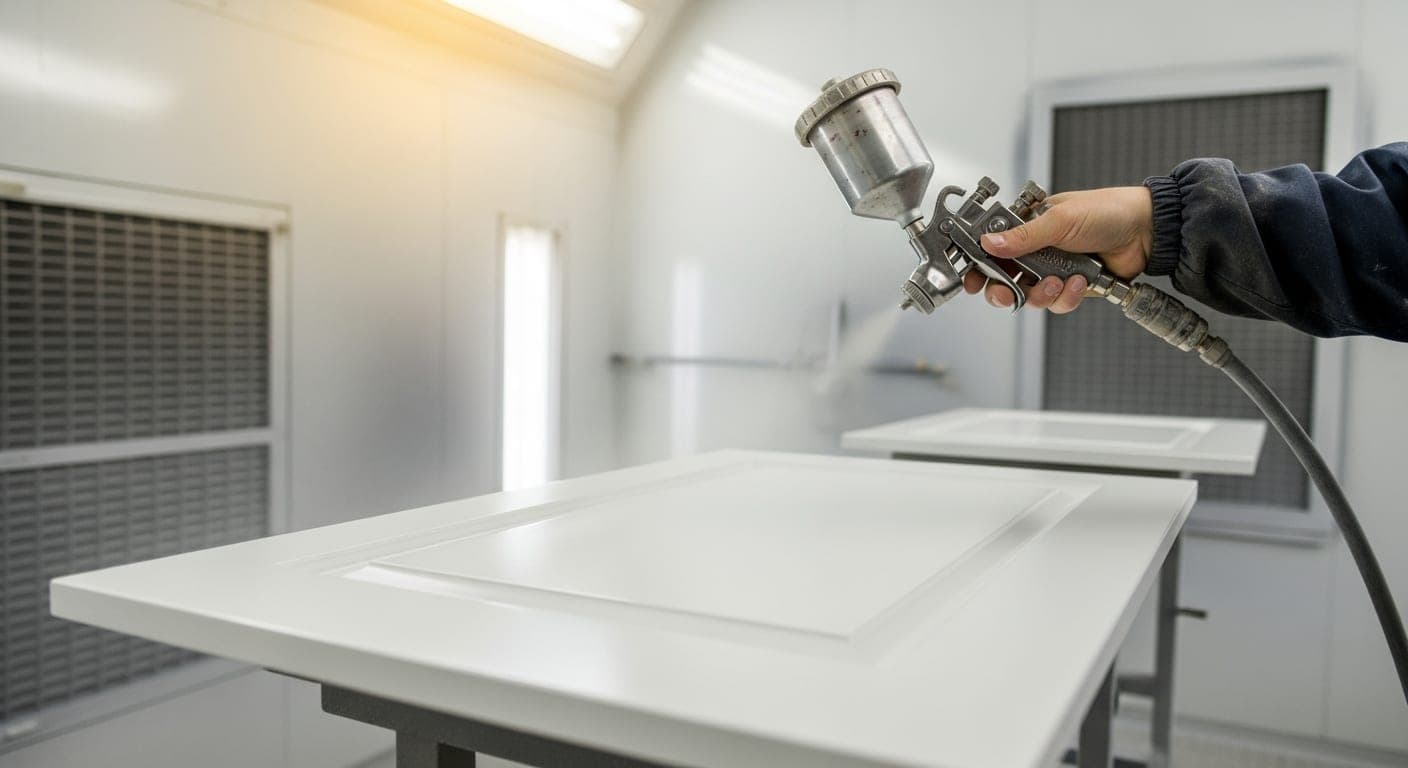
At Apico, we spray every painted surface with a premium-grade, UV-stable paint system engineered to resist UV degradation, chemical exposure, and physical impact.
The application process matters as much as the product. Our spray booth environment is temperature and humidity controlled. Each door receives multiple coats with sanding between layers. The final surface is inspected by hand before it leaves the factory.
Low-VOC and water-based options
We also offer water-based stains that are environmentally friendly and low-VOC finishing options. These are particularly relevant for families with young children, homeowners with sensitivities, or anyone who wants to minimise the off-gassing that comes with conventional finishes. Low-VOC does not mean low performance; the durability and colour depth are comparable to our standard system.
Warranty reflects confidence
Every Apico kitchen comes with a five-year warranty on finishes. We stand behind that number because the coating system we use is rated for it. Most stock cabinet manufacturers offer one year, or no warranty at all on their finishes.
The bottom line
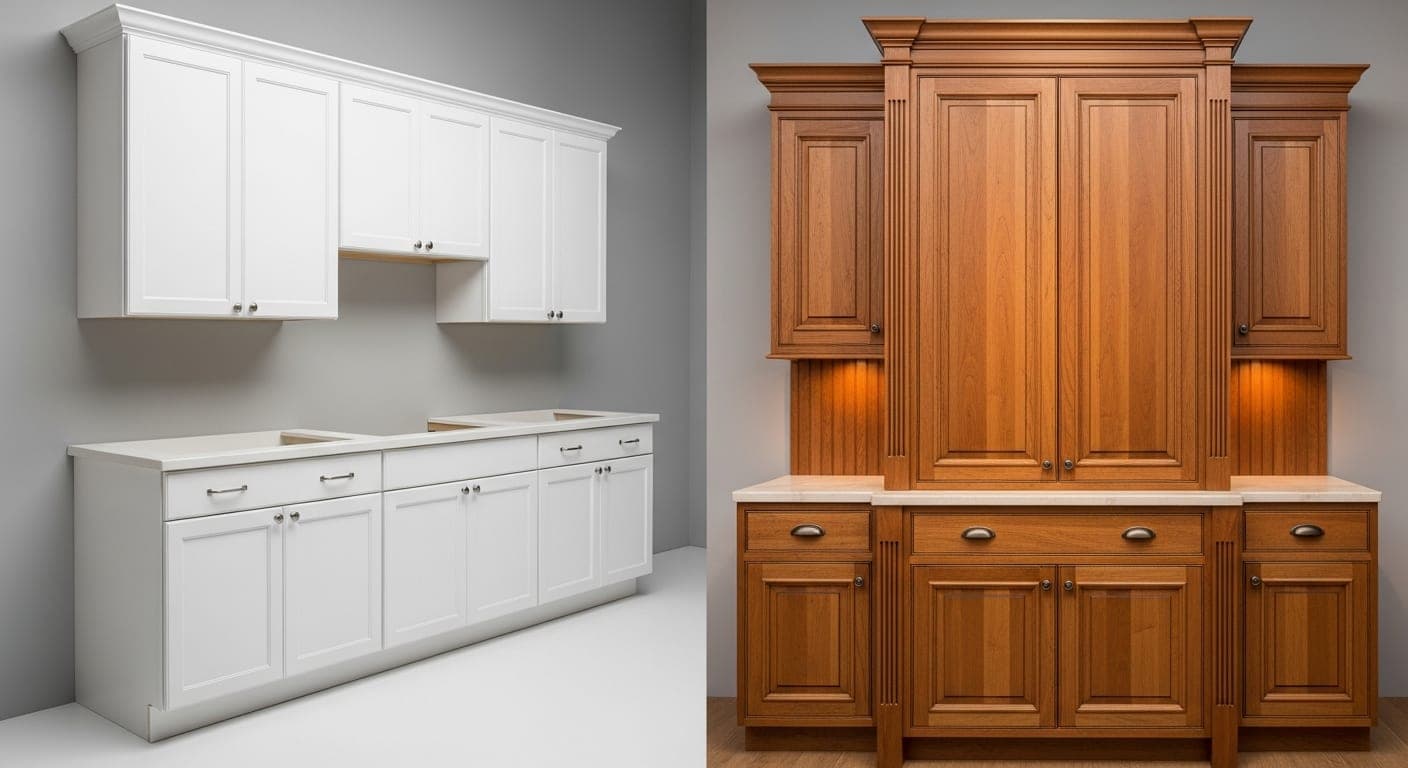
A kitchen finished with premium-grade paint still looks new after five years of daily cooking. The whites stay white. The greys stay true. The edges stay sharp. That is not a marketing claim; it is what we see when we visit our clients' homes years after installation for a new project in the same house.