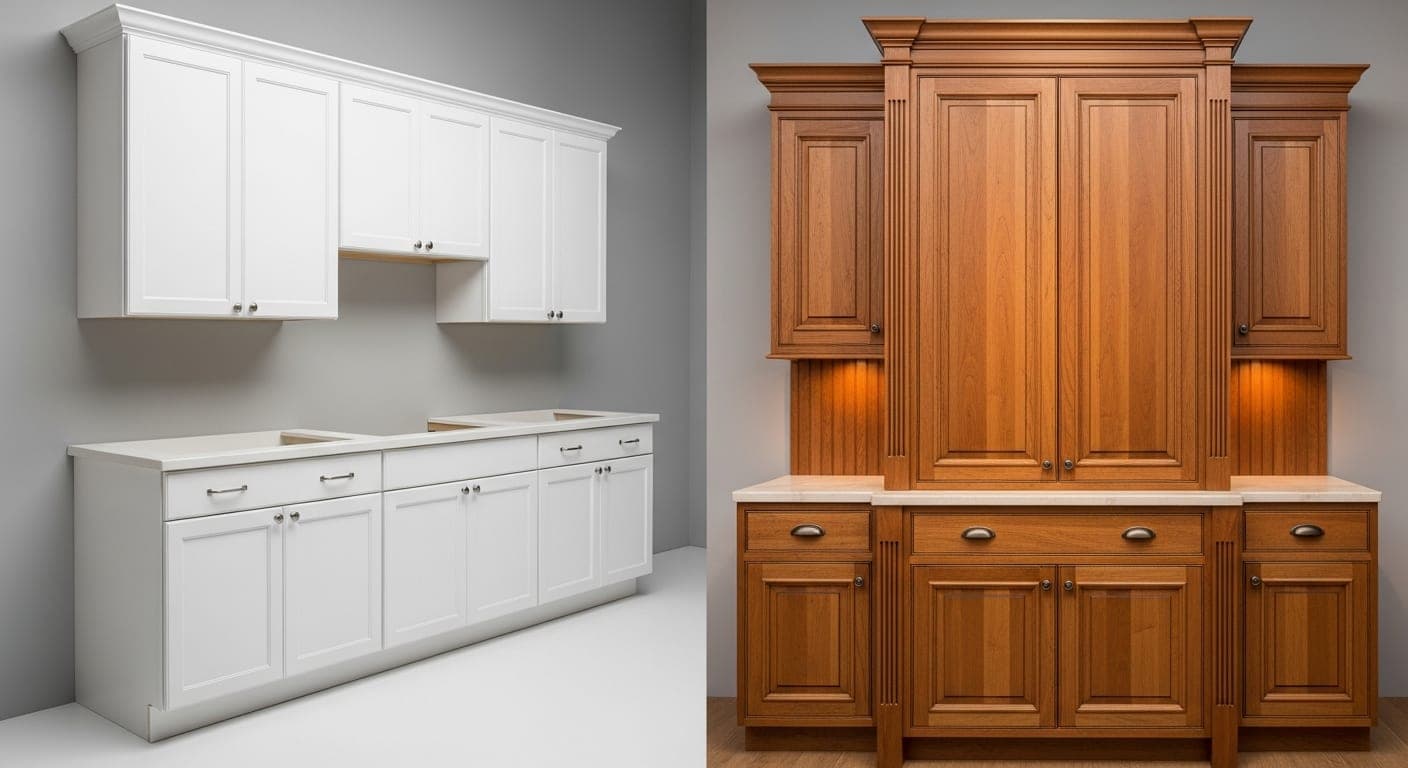
Here is the fair version of this comparison, because store-bought furniture is not always the wrong answer. If you rent, if you move every few years, or if the wall is straight and the piece just needs to hold books, a good freestanding unit is the sensible purchase.
A custom built-in wins in four specific situations: when you want the full height of the wall, when the wall itself is not straight, when there is equipment inside that needs to breathe, and when the piece has to look like it was always part of the house. Toronto homes supply all four situations in abundance.
What People Actually Ask Us to Build
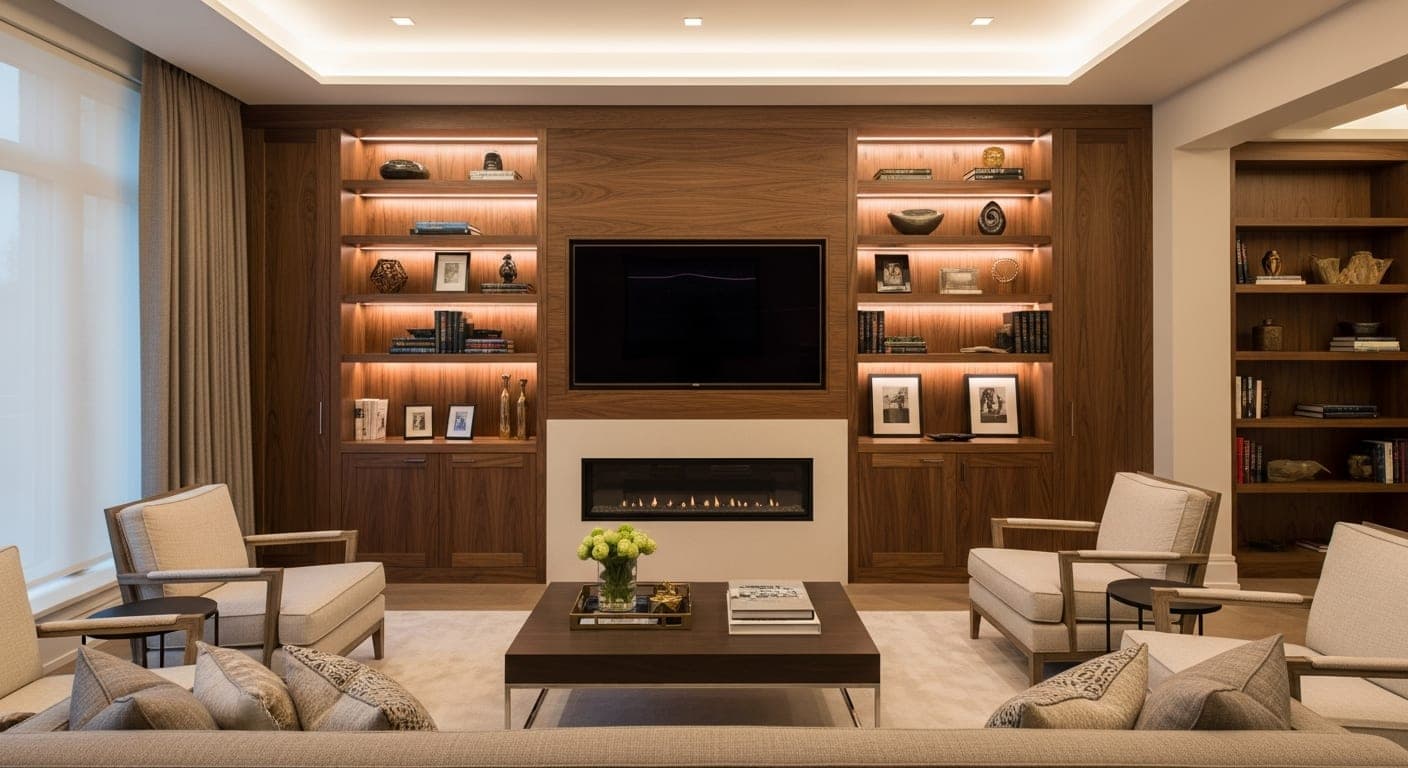
Two requests dominate our wall unit work. The first is the full media wall: a floor-to-ceiling run where the television, the consoles, the receiver, and every cable disappear into cabinetry, and what you see from the sofa is one composed surface. The second is the fireplace media wall, with cabinetry flanking an existing or new fireplace and the TV integrated above it.
Both are things freestanding furniture fundamentally cannot do, because both depend on the piece being built into the room rather than placed in it.
Floor-to-Ceiling: the Wasted Two Feet
Freestanding furniture stops at about 80 inches because it has to fit through doorways and ship in a box. Toronto ceilings run 96, 108, sometimes 120 inches. That gap above a standard bookcase is dead space that collects dust and shrinks the room visually.
A custom unit uses the full height: adjustable shelving where you can reach, closed storage up top for the things you touch twice a year, and a crown detail that ties the piece into the ceiling line. The room reads taller, and you gain real storage without giving up another inch of floor.
Irregular Walls: the Toronto Problem
Century homes, Victorian semis, post-war bungalows: most of this city's housing stock has walls that are not square, not plumb, and not consistent from floor to ceiling. Push a factory-made cabinet against a wall like that and you get a tapering gap you can see across the room.
This is where the built-in earns its name. We scribe every piece to the actual wall, trimming the cabinet to follow the wall's real line so the joint closes invisibly. It is slow, careful work, and it is the difference between furniture that sits in a room and cabinetry that belongs to it.
Fireplace Surrounds
Cabinetry flanking a fireplace anchors the whole room, and it is one of the jobs we are asked to do most. It is also the one with the least room for guesswork: gas, electric, and wood-burning fireplaces each have different clearance requirements, and we make that judgment per project so the millwork meets the masonry safely and cleanly.
Electronics Need to Breathe
The most common design mistake we see, including in expensive renovations, is hiding gear in a sealed box. Game consoles and AV receivers generate serious heat, and trapping them behind closed doors shortens their lives.
We integrate silent thermal-regulated fans with temperature sensors: they spin up as heat rises and shut off when the equipment is cool. Concealed cable chases keep the wiring invisible, and IR repeaters let your remote work through solid doors. The gear stays hidden, cool, and fully controllable. A furniture-store unit gives you a shelf and a hole for cables.
What It Costs, Honestly
Most of our wall unit projects land between $8,000 and $12,000. Simple built-ins start around $4,000; expansive floor-to-ceiling libraries with integrated lighting can reach $40,000. That is genuinely more than freestanding furniture, and the comparison is not one-to-one: a built-in is permanent millwork, scribed to your walls and finished like the rest of your home, and it stays with the house as part of its value rather than depreciating in a corner.
How to Decide
Buy furniture if the piece may move homes with you, the wall is straight, and nothing inside it generates heat. Build custom when the room has awkward geometry, when you want the wall used top to bottom, when there is a fireplace or a full media setup involved, or when the gap-and-filler look of placed furniture is exactly what you are trying to renovate away.
For ideas on the media wall side specifically, see our entertainment unit design guide.
Ready to design a custom wall unit for your Toronto home? Request a free consultation to discuss your space and see what a custom wall unit built to your walls actually looks like.