Space is a premium in many Toronto bathrooms. Whether you live in a pre-war home with a five-by-seven-foot bathroom, a downtown condo with a compact three-piece ensuite, or a house where the main bathroom serves the entire family, the vanity is often the largest piece of furniture in the room and the most critical to get right.
A stock vanity from a home improvement store comes in standard sizes that may not fit your space efficiently. A custom vanity is built to the exact dimensions of your bathroom, maximizing storage, improving functionality, and creating a cleaner, more intentional look.
This guide explores design approaches that make the most of small bathrooms through thoughtful vanity design.
Floating Vanities
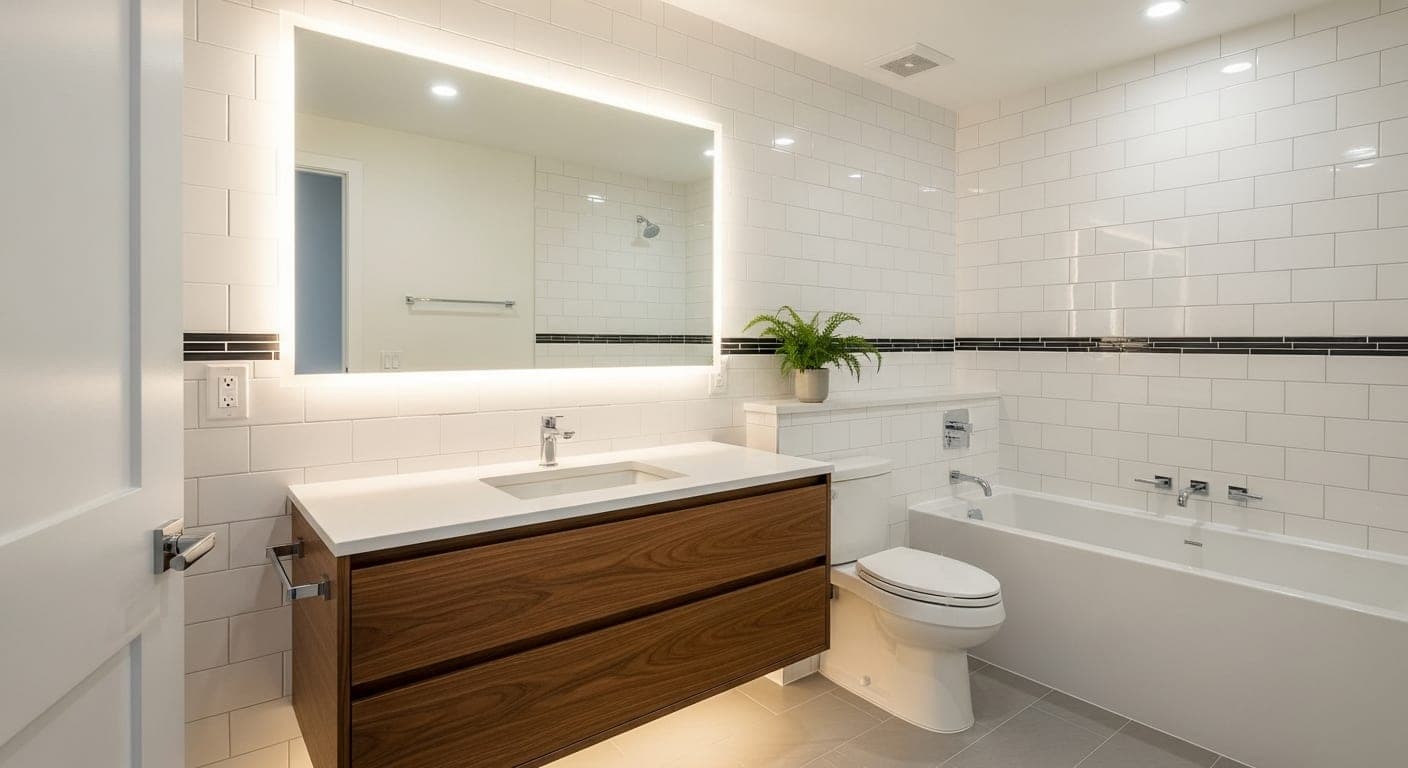
A wall-mounted or floating vanity is one of the most effective strategies for making a small bathroom feel larger. By suspending the vanity off the floor, you create visible floor space beneath it. This unbroken floor line tricks the eye into perceiving a larger room.
Floating vanities also have practical advantages. The exposed floor beneath them is easier to clean, and the open space can accommodate a small basket, a scale, or simply serve as visual breathing room. In bathrooms with in-floor radiant heating, a floating vanity allows heat to circulate more freely.
From a construction standpoint, floating vanities require secure mounting to wall studs or a reinforced backing panel installed during the rough-in phase. The vanity must be engineered to support the weight of the countertop, sink, and daily use without visible fasteners. This is where custom construction pays dividends: a custom floating vanity is designed with the specific wall conditions and load requirements of your bathroom in mind.
Floating vanities can be built at any height, which is an often-overlooked advantage. Standard vanity height is 32 to 36 inches, but a custom floating vanity can be mounted at whatever height is most comfortable for the people using it. Taller homeowners often appreciate a 36-inch or even 38-inch vanity height, which reduces back strain during daily use.
Corner Vanities
In bathrooms where a standard rectangular vanity would block traffic flow or encroach on the door swing, a corner vanity can be an elegant solution. By tucking the vanity into a corner, you free up floor space in the centre of the room and create a more open feel.
Corner vanities are uncommon in stock cabinetry because the angled construction requires non-standard dimensions. A custom cabinet maker can design a corner unit that fits precisely into the available space, with a countertop cut to follow the angle and a sink positioned for optimal usability.
The interior of a corner vanity needs careful design to remain functional. Angled interiors can create dead space if not properly organized. Pull-out trays, rotating shelves, and custom drawer configurations ensure that the full depth of the cabinet is accessible and usable.
Narrow-Depth Vanities
Standard vanity depth is 21 to 24 inches. In a small bathroom, reducing the depth to 16 or 18 inches can make a significant difference in available floor space while still providing a functional countertop and storage.
Narrow-depth vanities require a vessel sink or a compact undermount sink designed for shallower countertops. The reduced depth also means that drawers and shelves hold less, so interior organization becomes even more important. Custom drawer dividers, tiered storage, and pull-out organizers maximize the utility of every inch.
One effective approach is to vary the depth along the length of the vanity. The section containing the sink can be built at standard depth to accommodate plumbing, while adjacent storage sections are shallower. This stepped profile creates visual interest and optimizes the use of space.
Maximizing Storage in a Small Vanity
A small vanity does not have to mean minimal storage. Thoughtful interior design can pack a surprising amount of organized storage into a compact footprint.
Full-extension drawers are essential in small vanities. Unlike traditional cabinet doors with a single shelf, drawers provide full visibility and access to their contents. You see everything at a glance rather than reaching into the dark back of a cabinet. Soft-close, full-extension drawer slides ensure smooth operation and prevent slamming.
Tiered drawer inserts create two levels of storage within a single drawer depth. The upper tier holds smaller items like makeup, razors, and medications, while the lower tier accommodates taller bottles and containers. This approach effectively doubles the storage capacity of each drawer.
Pull-out organizers behind cabinet doors convert awkward shelf space into accessible, organized storage. A pull-out tray that slides forward brings items at the back of the cabinet into easy reach.
Interior door storage uses the back of cabinet doors for shallow storage. Mounted racks or pockets can hold hair dryers, brushes, or cleaning supplies, keeping them accessible but out of sight.
Tall, narrow pull-out cabinets flanking the main vanity use vertical space that would otherwise be wasted. A six-inch-wide pull-out can hold a surprising number of bottles, tubes, and small items when fitted with proper shelving.
Open shelving below a floating vanity provides storage for items you use daily, towels, or decorative baskets. It keeps frequently needed items within reach without requiring you to open doors or drawers.
Material Choices for Humid Bathrooms
Bathrooms are demanding environments for cabinetry. The combination of moisture, temperature fluctuations, and direct water exposure requires materials and finishes that can withstand these conditions over the long term.
Plywood cabinet boxes are strongly recommended over MDF or particleboard for bathroom applications. Plywood's cross-laminated construction resists moisture penetration and swelling far better than particle-based materials. Even when exposed to occasional water splashes, plywood maintains its structural integrity.
Painted finishes with high-grade flexible paint systems provide a sealed, moisture-resistant surface on door fronts. These finishes are designed to flex with the wood during Toronto's humidity swings, preventing the 'hairline joint cracking' that often appears on cheaper cabinets in February when the furnace is blasting. The key is a properly applied, multi-coat system with adequate cure time.
Lifestyle Integration. Custom design allows for features that big-box stores simply cannot provide. We can install internal plugs for hair dryers and electric toothbrushes inside your drawers so your counters stay clear of wires. Some clients even request a small integrated chiller for face products they want to keep cold, or a concealed towel heater for a spa-like experience. It's about building a vanity that matches your actual daily routine.
Solid wood doors in bathrooms require a finish that seals all surfaces, including edges and the back of the door, to prevent moisture from entering the wood and causing expansion or warping. Conversion varnish and catalyzed lacquer are both effective moisture barriers for bathroom applications.
Thermofoil is sometimes used in bathrooms for its seamless, waterproof surface. However, it is vulnerable to delamination in high-humidity environments, particularly near hot water sources. This makes it a questionable choice for primary bathrooms with showers, though it can perform adequately in powder rooms with lower humidity exposure.
Hardware in bathroom vanities should be corrosion-resistant. Quality hinges and drawer slides with nickel or chrome plating resist the humid bathroom environment better than uncoated steel components. Hardware with a lifetime warranty provides assurance that it will perform reliably despite daily moisture exposure.
Making the Most of Your Space
The most effective small bathroom vanities are designed with a holistic view of the room. Consider how the vanity relates to the mirror, lighting, wall storage, and overall traffic flow.
A custom vanity paired with a full-width mirror and integrated lighting creates the illusion of a much larger space. Recessed medicine cabinets built into the wall above the vanity provide additional storage without protruding into the room.
Light-coloured finishes and simple door profiles keep a small bathroom feeling open and uncluttered. High-gloss or semi-gloss finishes reflect light, further enhancing the sense of space. If you prefer a warmer look, natural wood tones in lighter species like maple or birch can achieve warmth without making the room feel heavy.
The countertop choice also affects the perception of space. A simple, uniform countertop in quartz or solid surface with an undermount sink creates a clean, uninterrupted surface that reads as larger than a busy pattern with a drop-in sink.
Ultimately, the advantage of a custom vanity in a small bathroom is precision. Every dimension is optimized for your specific space, your storage needs, and your daily routine. There are no compromises forced by standard sizes and no wasted inches that a stock vanity would leave behind.
For help selecting the right configuration, countertop, and style, read Choosing the Right Vanity for Your Toronto Bathroom.
Hardware and Accessories That Maximize Small Vanities
In a small bathroom, the hardware and interior accessories you choose have an outsized impact on daily functionality. The right hardware transforms a compact vanity from a cramped compromise into an efficient, enjoyable space where everything has its place and nothing is out of reach.
Soft-close, full-extension drawer slides are the single most important hardware specification in a small vanity. Full-extension slides allow the drawer to pull out completely, giving you full visibility and access to every item inside - including those stored at the very back. In a vanity where drawer space is limited, the ability to see and reach everything without rummaging is invaluable. Soft-close mechanisms prevent slamming, which protects both the vanity and the items stored inside. At Apico, soft-close, full-extension hardware is standard on every vanity we build, not an upgrade.
Pull-out trays installed behind cabinet doors convert deep, underutilized shelf space into accessible, organized storage. Instead of reaching blindly into the back of a dark cabinet, a pull-out tray brings everything forward to your fingertips. In a small vanity, where every square inch of interior space matters, pull-out trays ensure that nothing is forgotten or wasted in hard-to-reach corners.
Interior drawer dividers bring order to the items that tend to create chaos in bathroom drawers: cosmetics, hair ties, razors, dental care products, and medications. Custom-sized dividers, built to match the exact interior dimensions of each drawer, create dedicated compartments for specific categories of items. Tiered drawer inserts add a second level of storage within the same drawer depth, effectively doubling the usable capacity. This level of interior customization is one of the defining advantages of a custom vanity over a stock alternative.
Concealed electrical outlets installed inside vanity drawers or behind cabinet doors provide power for grooming tools - hair dryers, electric razors, curling irons, and electric toothbrushes - without cluttering the countertop with visible cords and chargers. When the drawer or door closes, the tools and their cables disappear entirely. This feature is particularly effective in small bathrooms where countertop space is limited and visual clutter makes the room feel even smaller. Electrical outlets inside cabinetry must be installed by a licensed electrician and planned during the design phase so that wiring can be routed properly.
Blum auto-open mechanisms enable handle-free cabinet fronts that open with a gentle push. In a small bathroom, eliminating protruding handles has both practical and visual benefits. Practically, handle-free fronts remove obstructions in tight spaces where a protruding handle can catch on towels, clothing, or a person passing by. Visually, the smooth, uninterrupted surface of a handle-free vanity creates a cleaner, more spacious appearance. The auto-open mechanism provides a satisfying, controlled opening action that feels premium in daily use. Combined with soft-close hinges, the entire open-and-close cycle is smooth, quiet, and effortless.
European hinges with integrated soft-close are the standard at Apico for all vanity doors. These hinges are fully concealed when the door is closed, contributing to the clean lines that make a small bathroom feel uncluttered. They are adjustable in three dimensions, allowing doors to be aligned precisely even on walls that are not perfectly plumb. The lifetime hardware warranty on every Apico vanity ensures that these mechanisms will perform reliably for as long as you own the vanity.
Ready to design a custom vanity for your Toronto bathroom? Request a free consultation to discuss your space and explore the possibilities with a custom vanity built to fit perfectly.