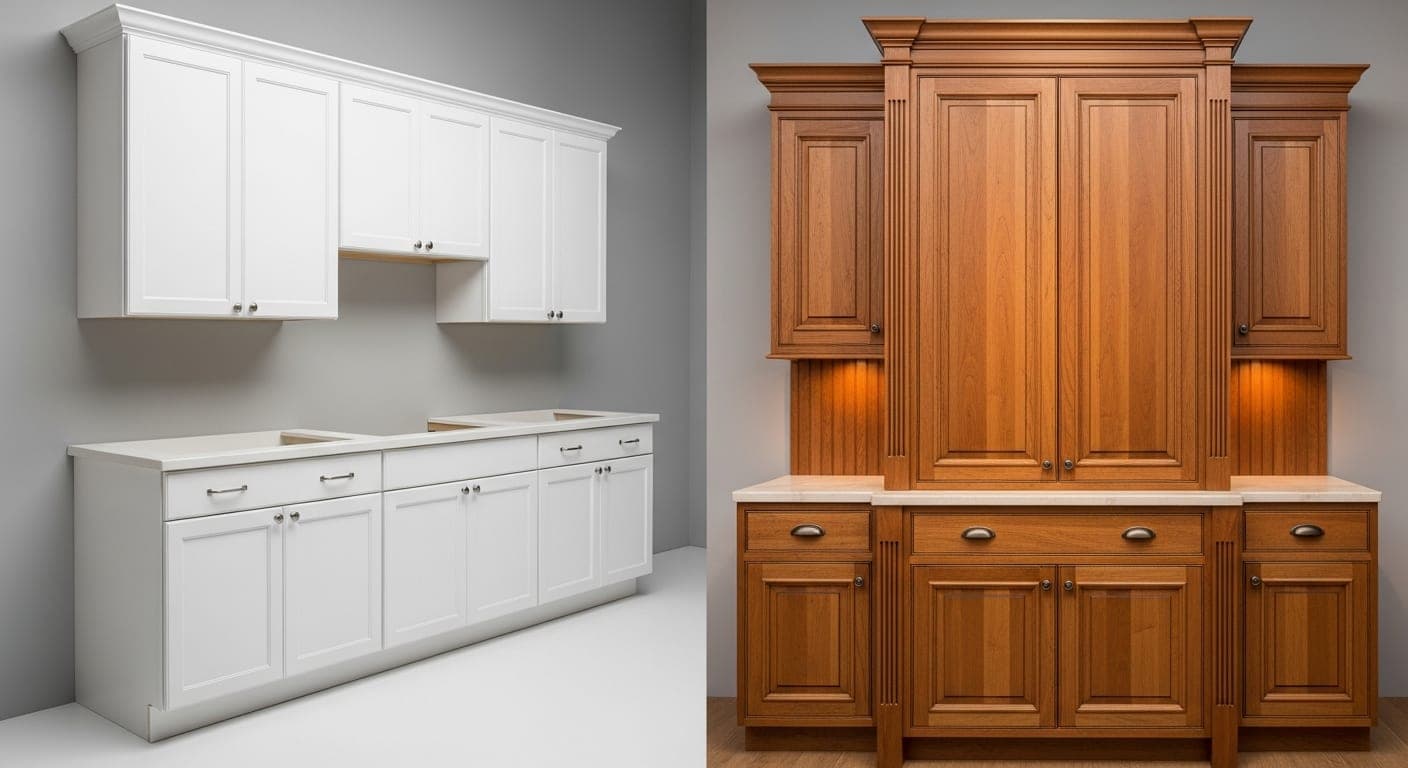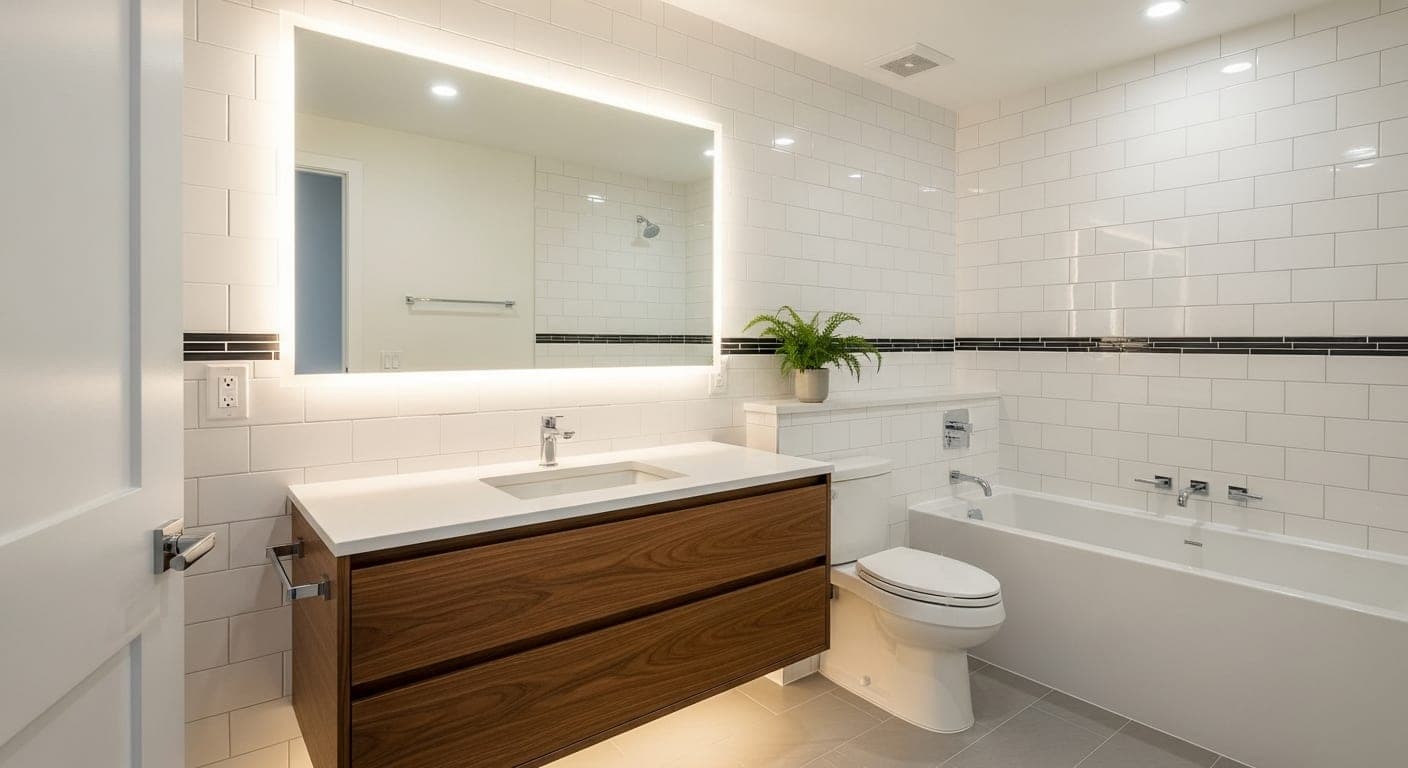
The vanity does more work than anything else in a bathroom. It holds the sink, the counter, most of the storage, and it is the first thing you see from the doorway. Get it right and the room works for decades. Get it wrong and you notice every single morning.
There are really three decisions to make, in this order: the configuration, the mounting style, and the countertop. Everything else is detail. We have been building vanities in the same Ontario factory as our kitchens since 1997, so what follows is less theory and more what we tell clients across the measuring tape.
Single or Double Vanity?
The honest answer: this is a counter-length decision, not a preference decision. Two undermount sinks each need roughly 24 inches of clear cabinet to sit in comfortably. Squeeze a double into a 60-inch run and you get two cramped basins, almost no counter between them, and drawers too narrow to hold anything useful.
Couples often default to a double because they assume it helps resale. In a lot of Toronto ensuites, a 72-inch single with a long stretch of counter and a dedicated drawer bank on each side serves two people better than two sinks jammed together. You rarely both need running water at the same moment. You both need counter space and drawers every day.
Where a double genuinely earns its second drain: two people who get ready at the same time, every morning, on the same schedule. If that is your household, the extra plumbing is worth it. If not, spend the money on storage instead.
Freestanding, Built-In, or Floating?
Floating vanities look light and make floor cleaning trivial, which is why they dominate modern renovations. What the photos never show is what sits behind the drywall: a wall-mounted cabinet carrying a stone top needs proper structural blocking in the wall. We install concealed supports as part of the job, and because the unit is custom we set the height to the people using it rather than to a factory standard.
Built-in is the strongest choice for an alcove. The cabinet runs wall to wall, we scribe it to the actual walls, and there are no gaps at the sides. That matters more than it sounds: in a bathroom, a two-inch gap beside a freestanding vanity is a permanent dust and moisture trap you can never quite clean.
Freestanding suits period homes and larger rooms where the vanity reads as a piece of furniture, with finished sides and legs. It is the right look in a Victorian semi. It is usually the wrong use of space in a five-by-eight condo bathroom.
Which Countertop Actually Holds Up
Quartz is our usual recommendation for bathrooms. It is non-porous, ignores toothpaste and cosmetics, and never needs sealing.
Marble is beautiful and we will build for it happily, but go in with open eyes: it etches on contact with acidic products, and a lot of skincare is acidic. If you choose marble, you are choosing to maintain it. Some clients consider that a fair trade. Nobody should discover it after the fact.
Granite sits in between: very durable, needs periodic sealing, and the pattern is busier, which either suits the room or fights it.
Whichever you choose, we template the top after the cabinet is installed, not before, so the stone fits the built reality of the room rather than the drawing.
Lifestyle-First Features
The biggest difference between a custom vanity and a store-bought one is how it handles your actual routine. Many Toronto homeowners are done with cluttered countertops, so we install outlets inside drawers for hair dryers, straighteners, and electric toothbrushes: the tools stay plugged in, charged, and out of sight.
For high-end ensuites, we have integrated hidden chillers for skincare and concealed towel heaters. We coordinate the electrical and plumbing around your habits, whether that means a his-and-hers split with dedicated storage on each side or a purpose-built compartment for grooming tools.
Moisture Resistance and the Toronto Climate
Toronto swings from humid summers to bone-dry winters, and that cycle is hard on painted wood. We spray with a premium flexible paint system designed to move with the material, which prevents the hairline cracks that commonly open up at cabinet joints in January. Nothing made of wood is truly waterproof, but our commercial-grade sealants are formulated for wet rooms, so the cabinet will not warp or swell from steam and daily splashes.
This is also our standing warning about big-box vanities: a thin foil wrap over a raw MDF core is exactly the construction that swells at the base after a few years of splash and mop water.
What a Custom Vanity Costs
Most of our vanity projects land between $3,000 and $4,000, including design, manufacturing, finishing, and installation. Compact singles come in lower; large doubles with premium stone run higher. If you are working with a small bathroom, we covered space-maximizing layouts in custom vanity ideas for small spaces.
Designing a new bathroom? Request a free consultation to explore custom vanity options built around your space, your routine, and the way the room actually gets used.